On fathers, sons, and the places where belonging takes root
Written by Edward Krigsman
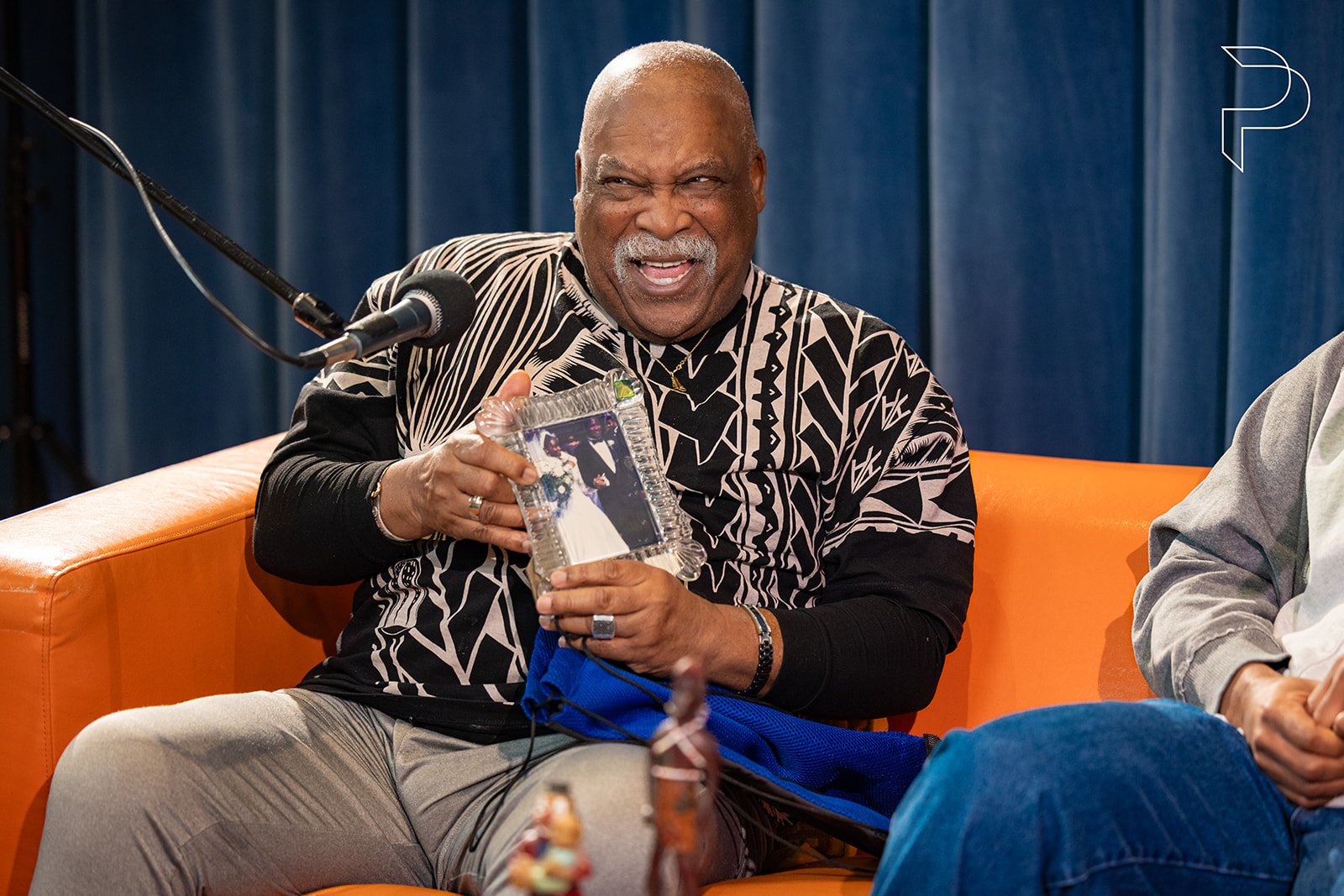
Dr. Donald Felder shares a photograph from his son Donte's wedding during their Power of Place interview.
Photo: Travis Lawton / Power of Place Project
Dr. Donald Felder remembers the day he began to see his father differently.
His father was nearing the end of his life, and Dr. Felder had been invited to the hospital. There he encountered brothers and sisters from his father’s side of the family, some for the first time. Listening to their stories, he discovered a man he had barely known—a father capable of giving love and affection to his children, even though Dr. Felder himself had grown up largely without experiencing that relationship.
“Sometimes when you don’t know the story, you only get half truths,” he recalled.
Learning that his father had been loving and present in the lives of his other children was difficult. It complicated the picture Dr. Felder had carried of him for so many years. In time, he found a place for his father’s photograph on the family wall. And from his own experience of growing up without that presence, he made a promise about the kind of father he would be.
“What my children would go through would never be without me being present.”
Dr. Felder recalls the promise he made to be present for his children.
Music: Lutra, a former student of Donte Felder.
I have returned to those words often since sitting down with Dr. Felder and his son, Donte, for an upcoming episode of the Power of Place podcast. Our conversations with them, and with people whose lives they have touched, revealed a story that extended far beyond one remarkable father and son.
As the father of a teenage son myself, I find the familiar landscape of childhood changing. Confidence can become fragile. Activities once embraced enthusiastically lose their appeal. School, friendships, and questions of identity grow more complicated. And the encouragement or advice that once seemed natural to offer doesn’t always land as intended.
I sometimes wonder whether I’m giving my son what he needs—or simply adding to the expectations he already feels.
I hadn't expected the Felders' story to make me reconsider my own role as a father.
The neighborhood that raised him
Long before Dr. Felder became an educator, principal, and advocate for young people, he was a young child growing up in South Seattle.
His mother arrived with her sister during an era when redlining and racial discrimination constrained where Black families could live. Dr. Felder spent some of his earliest years in Holly Park, where he remembers racing down grassy hills on flattened pieces of cardboard with his cousins.
They would run as fast as they could, leap onto the cardboard, and careen downhill, sometimes tumbling off and rolling through the grass.
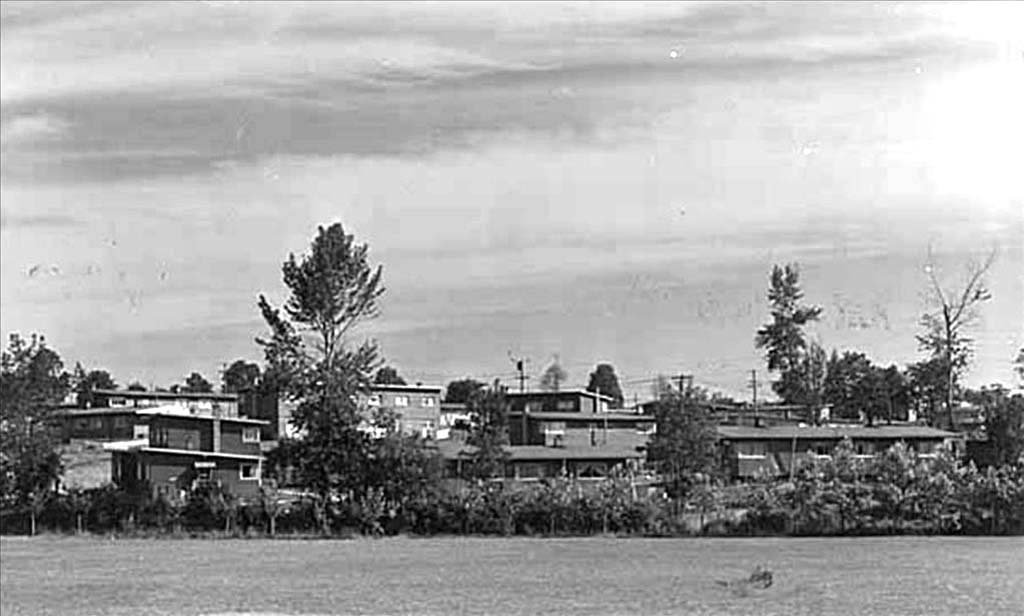
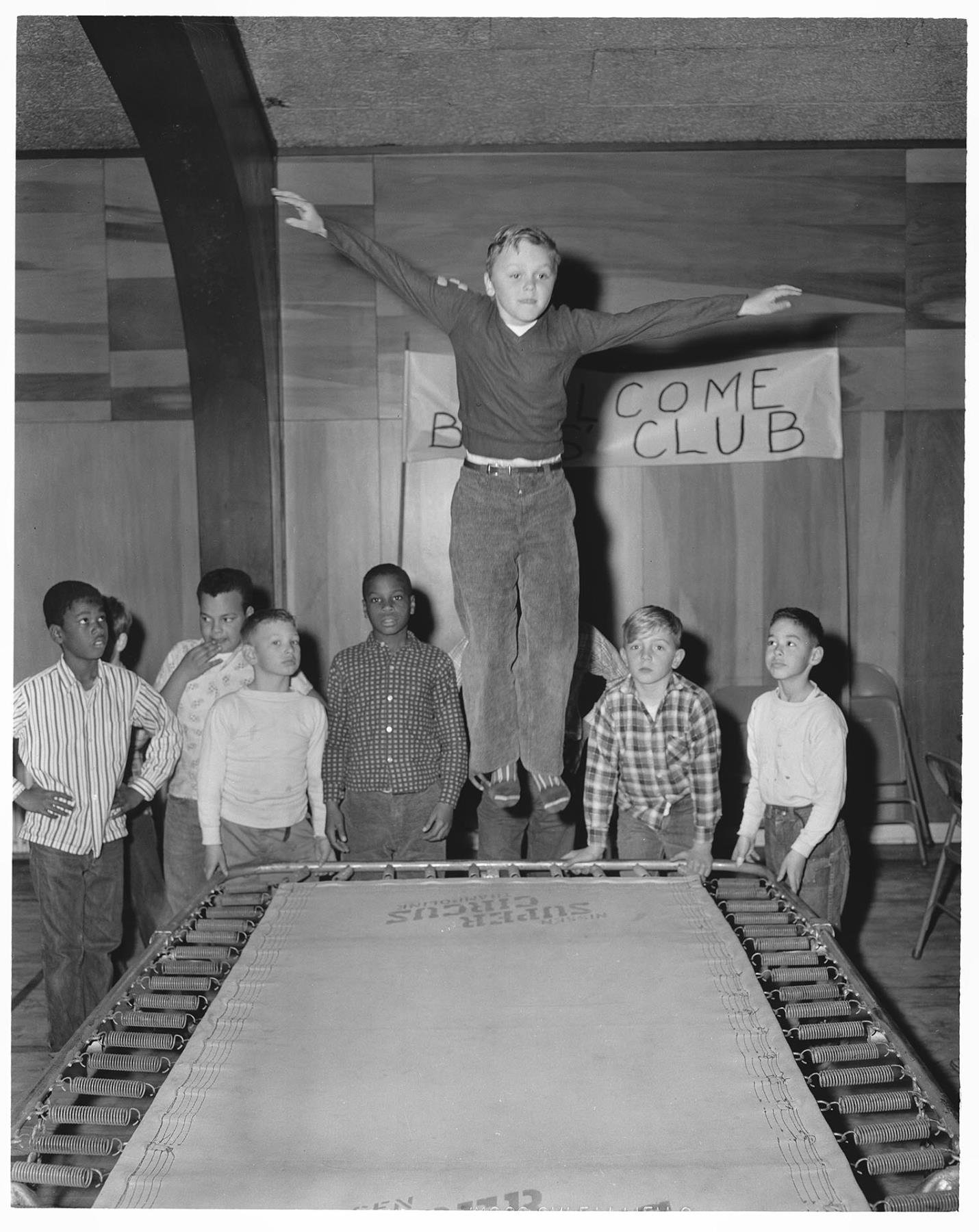
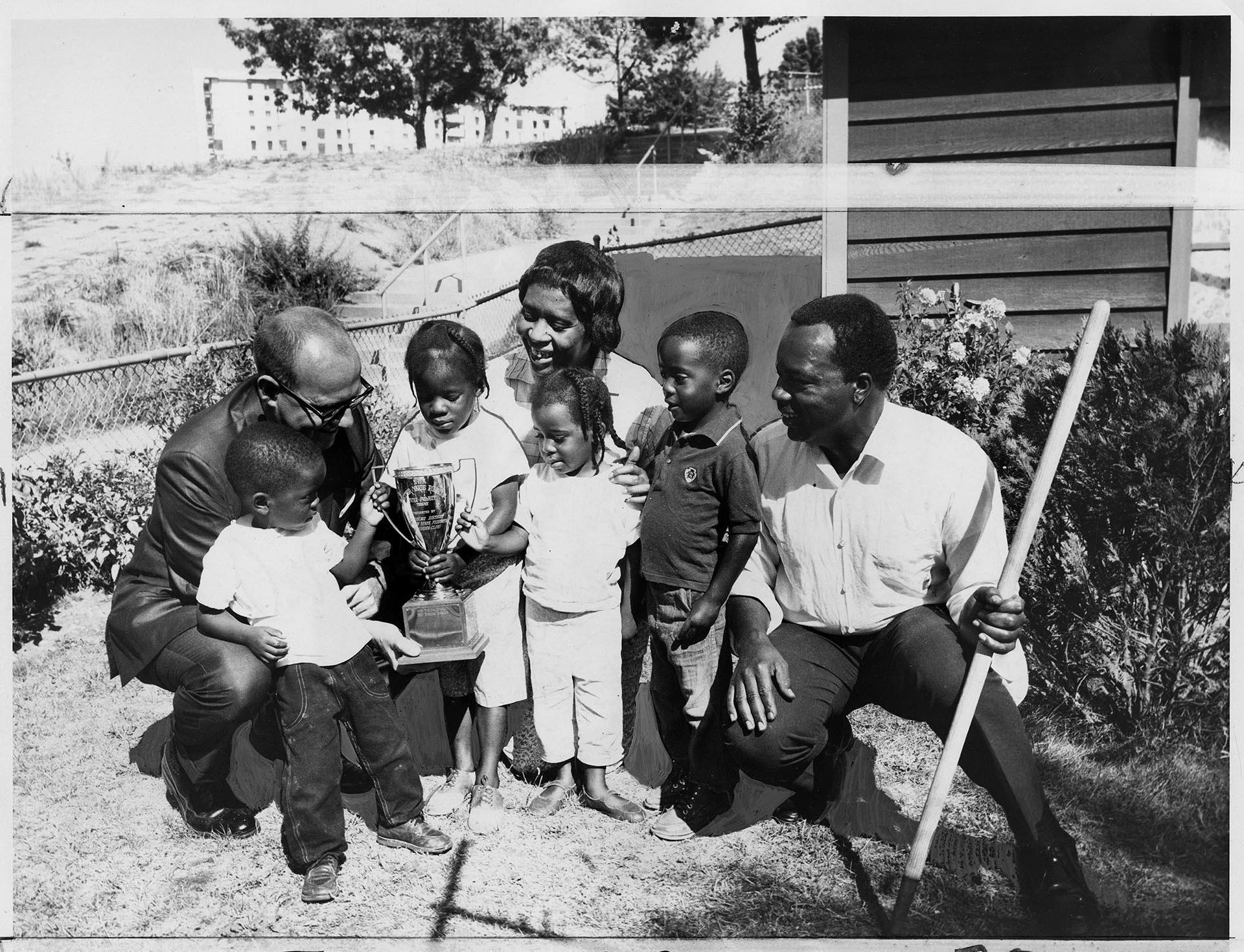
Archival photographs of Holly Park, a South Seattle community originally built as wartime housing and later converted to public housing, where Dr. Felder spent part of his childhood.
“We didn’t have much” he recalled. But they had play. And laughter. And the magnificent possibility of reaching the bottom first.
When his mother bought a house in the Central District, it was cause for celebration. But what made this place a home extended far beyond its walls.
At Horace Mann Elementary School, his teachers knew his mother. They encountered one another at church, in neighborhood stores, and along the streets where Dr. Felder played. Mrs. Allen, his first-grade teacher, knew his mother personally. Mrs. Stokes, his beloved third-grade teacher, continued greeting him with affection long after he’d become an educator himself.
Neighbors stopped him to ask about school. They wanted to see his report card. They knew where he lived and who was raising him.
There was affection in these relationships, but also expectation and accountability. Dr. Felder remembers feeling that he belonged.
These recollections brought me back to a December evening in 2009, when I attended a talk by Bill Gates Sr. at the University of Washington’s William H. Gates Hall, following publication of his memoir, Showing Up for Life. I remember Gates describing the childhood he and his wife created for their children in Northeast Seattle, where neighborhood kids moved freely between homes, welcomed by families who knew one another and shared informally in raising them.
Many circumstances of the Gates and Felder families were quite different. But both accounts suggest how much of childhood unfolds beyond the family home, among adults who know a child and care what becomes of them.
It's easy to romanticize such memories, particularly when Dr. Felder's childhood community faced entrenched discrimination and limited opportunities. Yet what strikes me is the abundance he experienced amid those constraints—not of material possessions, but of relationships.
What happens when belonging is lost?
Another of Dr. Felder’s reflections challenged my assumptions about Seattle’s history.
In a 2023 StoryCorps conversation with his friend Delbert Richardson, Dr. Felder recalled leaving Garfield High School as a sophomore to play football at Cleveland in the nearby Beacon Hill neighborhood. He remembered teachers in the Central Area as people he also encountered at church and in neighborhood stores. At Cleveland, those familiar connections were absent. When a white math teacher called him to the front of the classroom and quietly told him he would never amount to anything, he began to feel he did not belong.
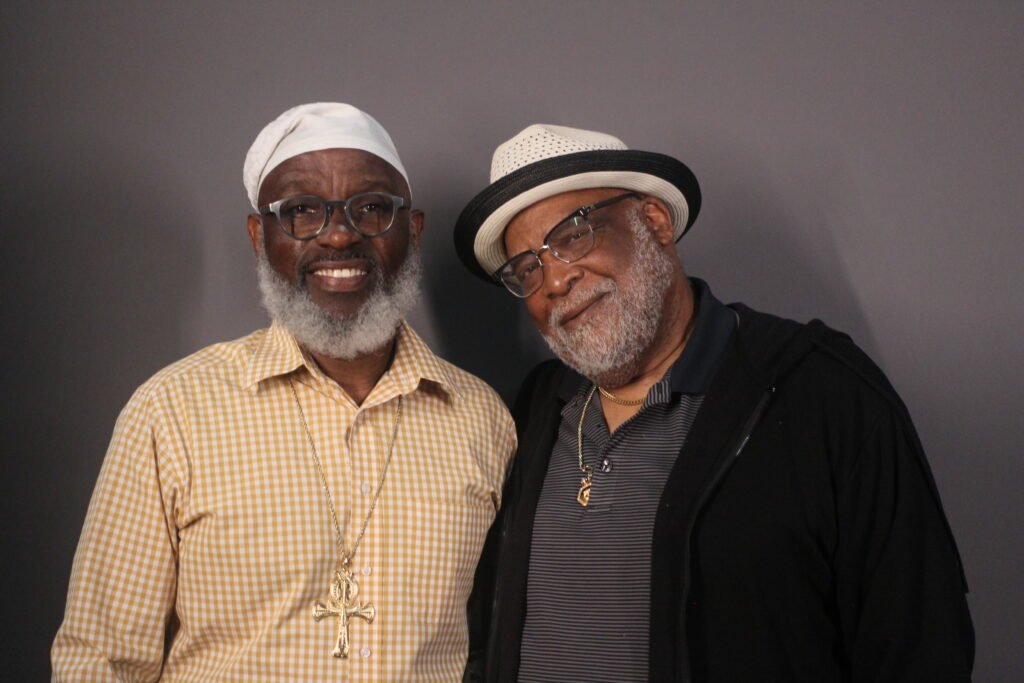
Dr. Donald Felder (right) with longtime friend Delbert Richardson, creator of The Unspoken Truths traveling museum.
Looking back, Dr. Felder questioned what desegregation had delivered for Black children when community ties were weakened and racial separation persisted within schools. Yet he also described Black and white children thriving together in classrooms that deliberately cultivated cooperation and belonging.
His perspective took me aback. I had long understood integration primarily as an essential achievement of the civil rights movement, expanding opportunities for children previously denied equal access. Dr. Felder wasn't disputing that achievement. He was asking what might be lost when children entered new institutions without the relationships that had sustained them.
His reflections complicate our understanding of progress and underscore the power of place. What must a school preserve—or build—so that children feel known and supported?
I thought again about the beloved Mrs. Allen and Mrs. Stokes, and the neighbors who asked Dr. Felder for his report card. Those relationships were not something a school district could simply transport on a bus.
What a son learns by watching
Long before Donte Felder became a filmmaker, graphic novelist and educator, he was a boy watching his father move through the world—coaching basketball, opening the family home to young people, taking them on trips and introducing them to new experiences. Through those relationships, Donte learned something about how a man might conduct himself in the world.
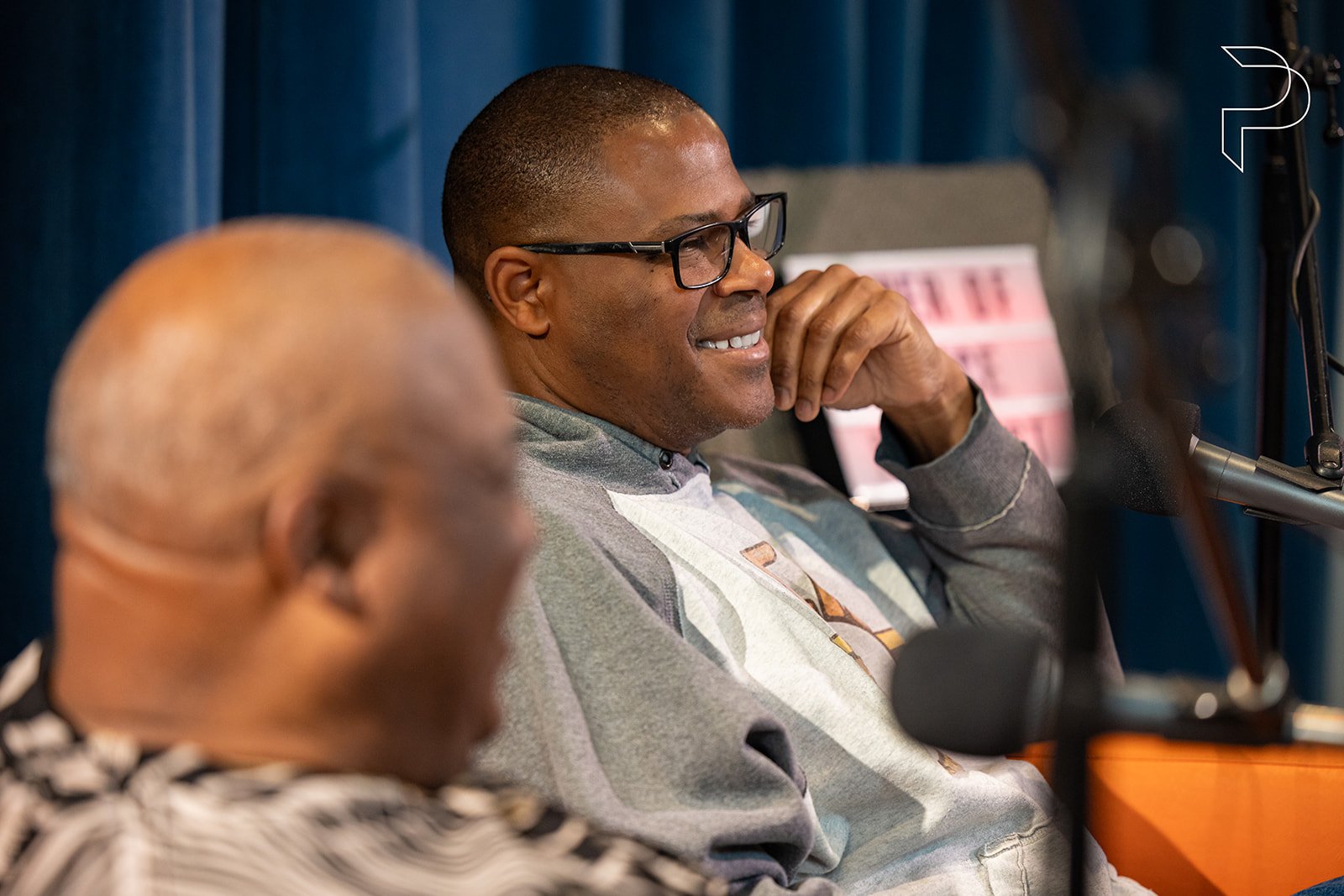
Donte Felder listens to his father during their Power of Place interview at Jack Straw in Seattle.
Photo: Travis Lawton / Power of Place Project
The two also shared a love of comic books and superheroes.
As a child, Dr. Felder earned money mowing neighborhood lawns, then spent some of it on jelly doughnuts and comic books. He would retreat to the basement with a glass of ice water and read Superman, Spider-Man, and the Fantastic Four.
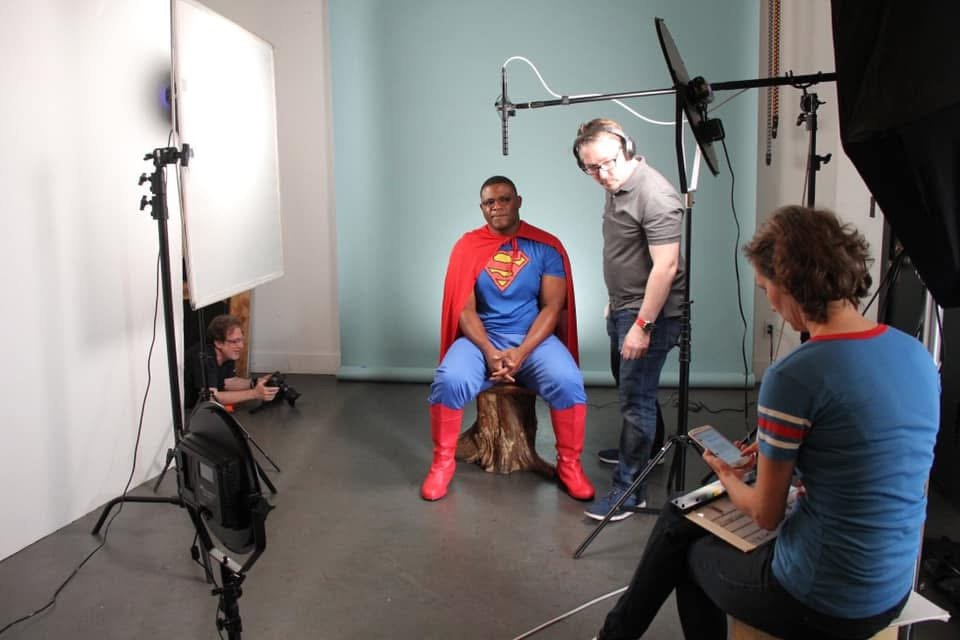
Donte Felder as Superman during a photo shoot celebrating heroes in the community.
Photograph by Nate Gowdy.
Dr. Felder took Donte to see the early Superman films, and Donte still remembers sitting in the theater as a small boy, captivated by the story of a young person discovering that he had a purpose in the world.
Those childhood experiences stayed with him. The superheroes of his imagination would eventually find expression in the stories he created and the opportunities he opened for young people to tell stories of their own.
But comic books were only part of what he inherited from his father.
Dr. Felder remembers a teacher telling him he would never amount to anything. Years later, a university professor offered a different message:
“I see something in you that you don’t see in yourself.”
Donte experienced something similar as a child at John Muir Elementary. Despite thriving in an advanced classroom and having the support of his teacher, he was removed from the program because of a test. His father challenged the decision, recognizing the damage that could be done when an institution's assessment of a child conflicted with what the child had already demonstrated.
Both men understood what it meant to have their potential questioned. And both came to believe that an educator's responsibility extended beyond delivering instruction to recognizing possibilities that a young person might not yet see.
Donte put those convictions into practice through South End Stories, which grew from a community effort to bring theater and the arts into schools. Students wrote plays, created graphic novels, made films, and saw their work presented on professional stages and movie screens. Some went on to pursue careers in the very fields they had first encountered through the program.
Another family influence helped shape Donte's next chapter.
During a hospital visit near the end of his grandmother's life, Donte remembers her smiling and repeatedly offering him her lunch. Living with dementia, she would forget that she'd already asked whether he was hungry. Yet each time, the offer came with the same warmth and generosity.
Donte was struck by the gesture. Even from her hospital bed, his grandmother's instinct was to care for someone else.
After her death, he inherited property and other resources. Rather than simply spending the inheritance on himself, he began thinking about how he might turn it into something lasting.
The result was Next Hero Up, an initiative that extends his work with young people and artists through theater, filmmaking, graphic novels, teaching artists, and access to creative resources.
His grandmother's generosity had taken a new form. The care she offered him from her hospital bed would find its way into the lives of young people she would never meet.
His grandmother's generosity inspired Donte to create Next Hero Up.
Music: Lutra, a former student of Donte Felder.
Father and son have contrasting personalities. Dr. Felder's exuberance fills a room; Donte often seems most fully expressed through the creative work he brings into being.
Yet their similarities are unmistakable in the opportunities they create for others. Dr. Felder found his purpose in education, and Donte has carried those values into new forms of expression, shaped by his own interests and experiences.
Our children needn't become versions of us for our influence to matter.
The house that was always there
The values Donte carried into his own work were first modeled in the home where he grew up. And the Felder household became a place of belonging not only for Dr. Felder's children, but for other young people who found their way through its doors.
La’Keith Asphy knew him as Coach.
Growing up around Garfield Community Center, La’Keith played basketball with Dr. Felder’s sons and sometimes spent the night at the Felder house before big games.
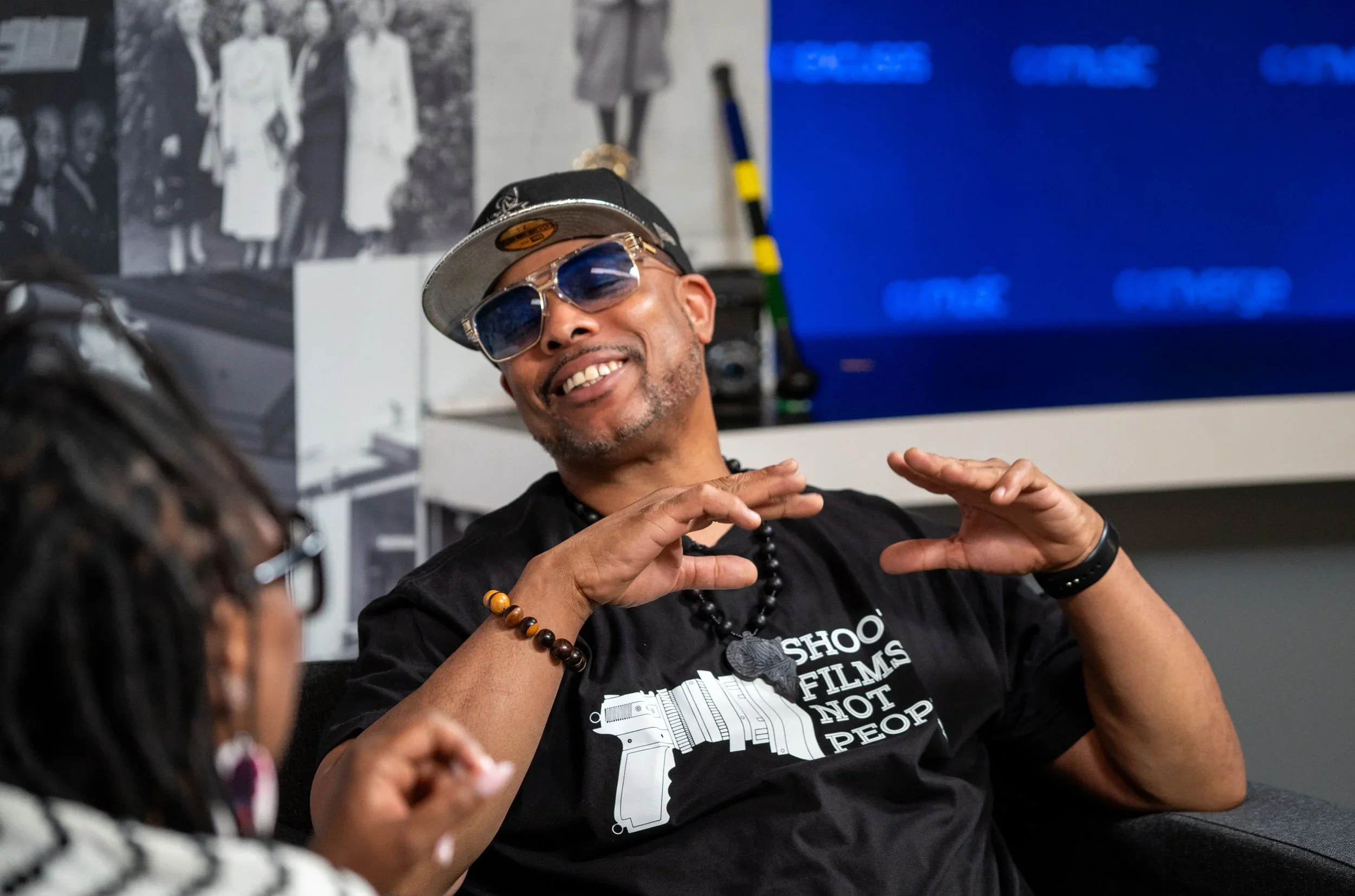
La’Keith Asphy during an interview with Converge Media's The Day with Trae.
Photo: Susan Fried / Converge Media.
He recounts encountering a computer there for the first time. While the other children played games or watched television, La’Keith became fascinated by the machine. That curiosity eventually helped lead him toward a career in graphic design and printing.
But another memory stayed with him.
La’Keith moved frequently as a child, sometimes uncertain where he would be living next. Yet he always knew where the Felder house was.
He never needed to move in. What mattered was knowing he could.
“I knew I would be welcome there,” he recalled.
Years later, La’Keith observed that Dr. Felder still lived in the same house, remarkably retaining even the same landline telephone number.
The same address. The same phone number. The same man who always answered.
La’Keith recalls the Felder home as a place where he was always welcome.
Musical introduction by Lutra, a former student of Donte Felder.
La’Keith also witnessed Dr. Felder raising his nephew Omar alongside his own children. Years later, La’Keith would help raise several of his own nieces and nephews, recognizing in his choices something of the compassion he’d seen growing up.
What was modeled inside one home found its way into another.
A man who knows how to laugh
There is another quality that comes through in nearly every conversation about Dr. Felder.
His laugh.
Not a polite chuckle or an occasional smile, but a big, unmistakable, full-bodied laugh that seems to arrive before he does.
Former students remember it decades later. Colleagues recall his fondness for clowns, his playful teasing, and his habit of greeting people with wishes for joy, peace, love, and happiness.
Toya T. Taylor, founder of Seattle’s Speak With Purpose, remembers watching Dr. Felder dance with her mother in a Chicago-style stepping group—a smooth, improvisational African American partner dance rooted in Chicago’s Black social dance traditions. She remembers his animated movements, infectious laughter, and the joy he brought to the dance floor.
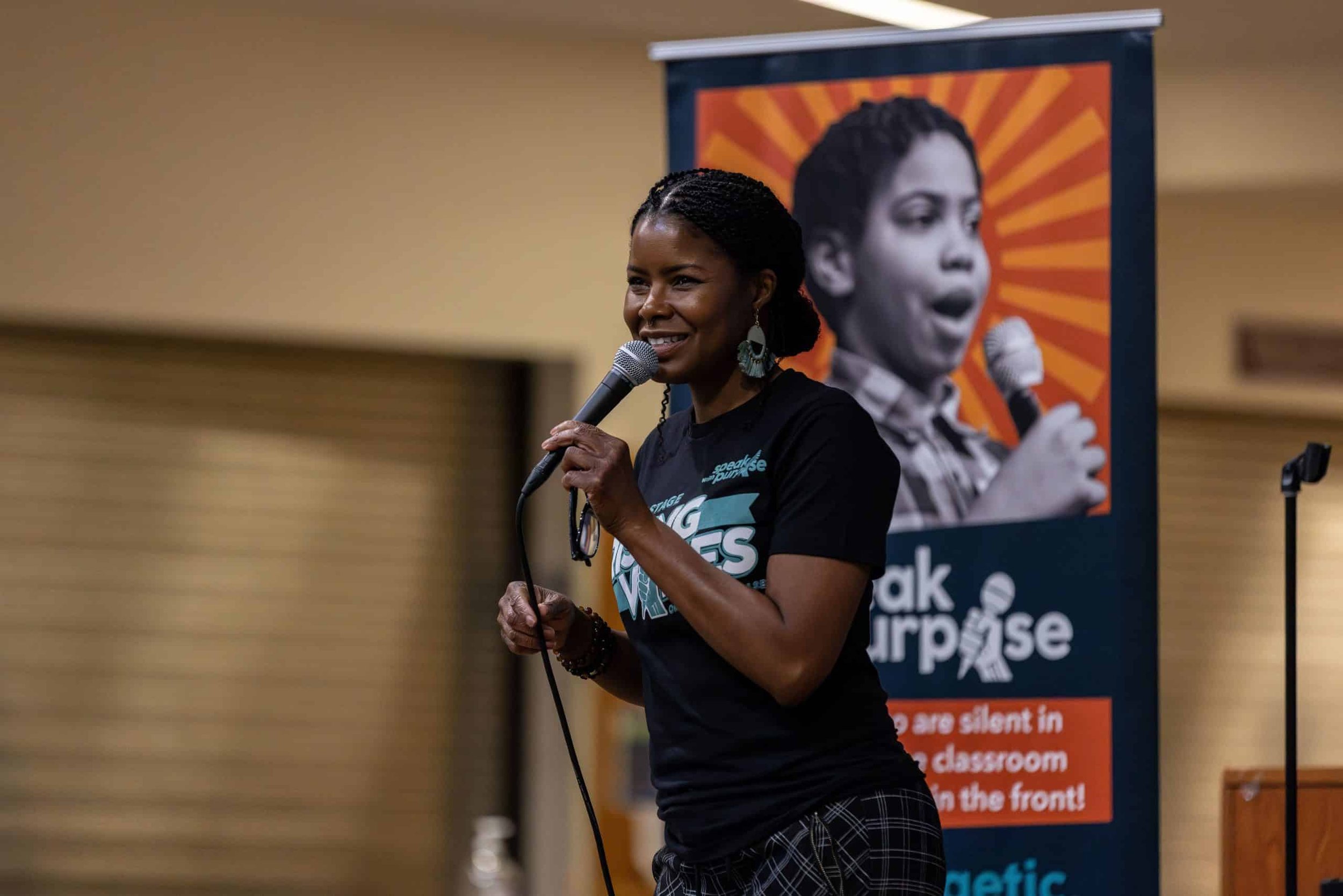
Toyia T. Taylor, founder of Speak With Purpose, at the Rising Voices Centerstage event at Seattle's Museum of Flight.
Photo courtesy of Speak With Purpose.
Years later, when Toya was honored for her work in education, Dr. Felder showed up at the celebration wearing a top hat and African-inspired clothing.
He had been walking with a cane. But when he saw Toya, he set it aside.
“May I have this dance?”
He took her onto the floor and twirled her around.
Dr. Felder dances with Toya Taylor at a celebration honoring her work in education.
Video courtesy of Toya Taylor. Used with permission.
Toya, who was raised by a single mother, became emotional remembering the dance. For a moment, she felt like a little girl dancing with her father.
Dr. Felder had set aside his cane, taken her hand, and celebrated her achievement in front of a roomful of people.
In that simple gesture, she felt something beyond celebration: the affection and pride of an elder who had watched her grow. It was his way of saying, as Toya remembers it, I see you, Toya. This is your moment.
Toya recalls an unforgettable dance with Dr. Felder.
Musical introduction by Lutra, a former student of Donte Felder.
Dr. Felder has spent much of his professional life arguing that joy and belonging are essential to how children learn.
He doesn’t just advocate joy. He practices it.
I find myself thinking about how easily, as fathers, we become preoccupied with performance—grades, sports, responsibility, achievement—and how readily the simple pleasure of being together gets crowded out.
My son may not always need another conversation about what he ought to be doing.
Perhaps sometimes he just needs his dad to laugh with him.
The children who carry it forward
The Felders’ influence extends well beyond their own family.

Melvin Jones playing basketball for Portland State University, circa 2010–11.
Photo: Portland State Athletics. Photographer credit and reproduction permission to be confirmed.
When Melvin Jones met Dr. Felder, he was 18 and struggling to finish high school at Chief Sealth. Between basketball, night school, summer classes, and an additional year of coursework, the demands sometimes felt overwhelming.
Dr. Felder came to see him at school. He attended his basketball games. He kept showing up and checking in, encouraging Melvin when he doubted his ability to finish.
Years later, when Melvin graduated from Portland State University, Dr. Felder showed up for that, too.
Melvin remembers Dr. Felder showing up for his college graduation.
Musical introduction by Lutra, a former student of Donte Felder.
Today, Melvin leads Evolve Youth Empowered and Mentorship, bringing similar encouragement to another generation.
The courage to question
When Aliah Medina was in seventh grade at Orca K–8, she challenged a classroom lesson that divided Americans into five racial colors: black, white, brown, red, and yellow. As a student of Middle Eastern heritage, she couldn't see herself in those categories. When she questioned the lesson, her teacher suggested she was a mixture of black and yellow.
Aliah wasn't satisfied. She proposed replacing the classroom sign with something more inclusive. Instead, she was referred to Dr. Donald Felder.
She found both Dr. Felder and his son Donte in Donte's office. Rather than dismiss her objection, they listened. Dr. Felder supported her concerns, while Donte went a step further, arranging for her to study history in his classroom rather than return to the class where the conflict had arisen.
Donte handed her Howard Zinn's A People's History of the United States, inviting her to explore American history through a different lens.
A classroom disagreement taught Aliah a lasting lesson about teaching.
Music: Lutra, a former student of Donte Felder.
Years later, preparing for a teaching career herself, Aliah reflected on what the experience had taught her: the importance of an educator being willing to acknowledge when they're wrong. She still turns to Dr. Felder for guidance.
There's always time to laugh
Naomi True, a Garfield High School graduate and now an educator herself, first encountered Donte Felder as his student. She later reconnected with him through South End Stories, where she served as the program's first manager.
What stayed with Naomi was not simply what Donte taught, but how he approached young people. She remembers watching him reach students who seemed disengaged, sometimes through a brief creative exercise that opened a door to something unexpected.
“Donte models for me that there's always time to laugh and that it's never too late for anybody,” she recalled.
Now an educator herself, Naomi carries that example into her own classroom, recognizing that a young person's potential isn't always immediately visible.“Donte models for me that there's always time to laugh and that it's never too late for anybody,” she recalled.
Naomi has carried that example into her own teaching. She remembers watching Donte reach students who seemed uninterested, sometimes through a brief creative exercise that opened a door to something unexpected. His example taught her that a young person's potential is not always immediately visible—and that a teacher's willingness to keep trying can make all the difference.
Naomi remembers Donte's humor and his faith in young people.
Music: Lutra, a former student of Donte Felder.
The student who became family
For decades, Dr. Felder has been the one offering encouragement, making room for others and celebrating their achievements. But as the years have passed, some of those relationships have begun to change direction.
JoVon Bosley was Dr. Felder’s third-grade student at Colman Elementary, the historic school building now housing the Northwest African American Museum. Years later, after working at a law firm, she turned to her former teacher for help pursuing a career in education. Within weeks of reaching out, she was working at Interagency Academy, where Dr. Felder was principal.
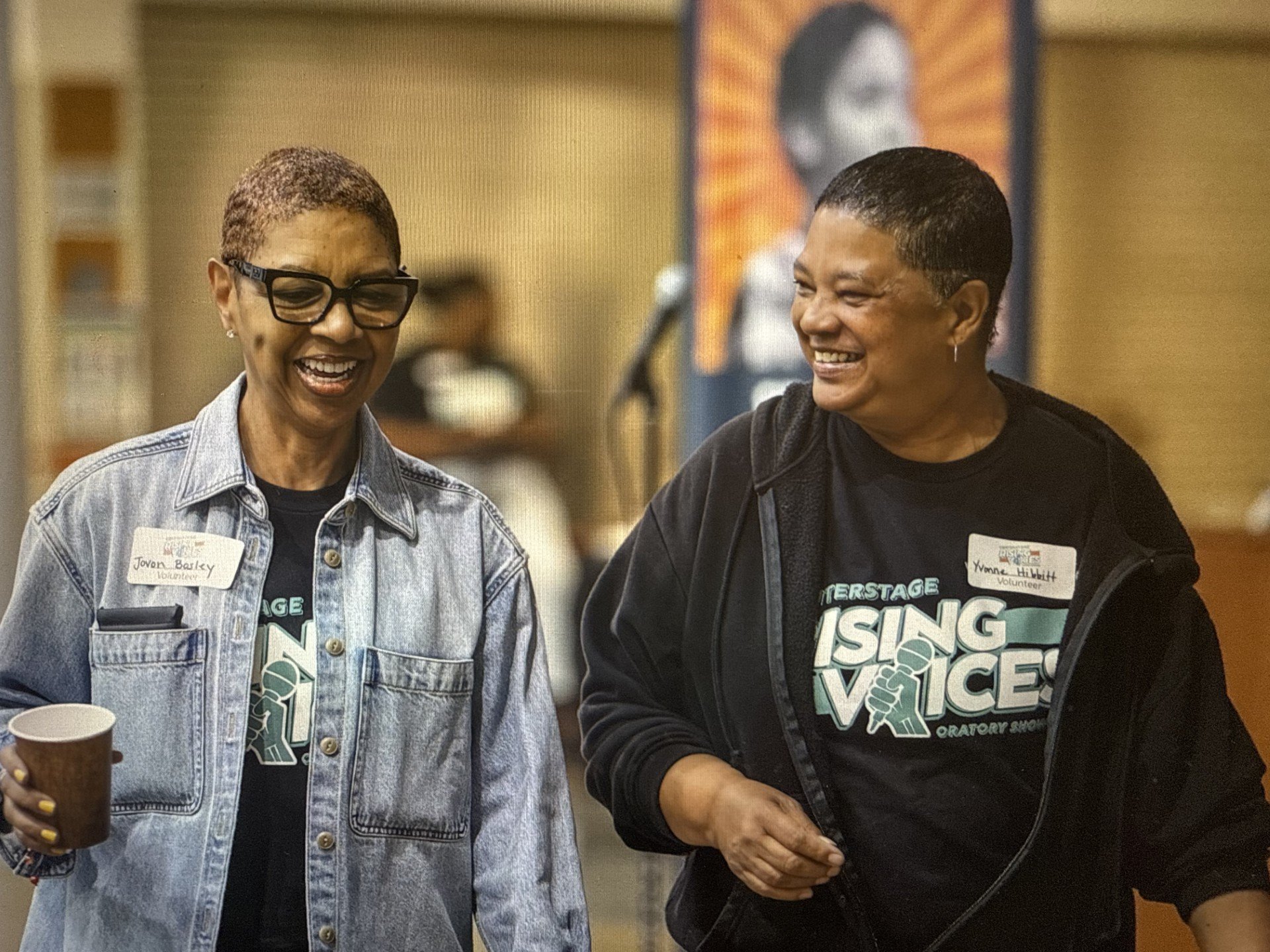
JoVon Bosley (left) volunteers at a Speak With Purpose event.
Photo courtesy of Speak With Purpose.
At a professional meeting some years later, JoVon stood to speak about the work they were doing together. As she addressed the room, Dr. Felder proudly called out, “That’s my third-grade student. That’s my third-grade student right there.” JoVon remembers how much his pride meant to her. It felt, she said, like having a father announce to the room, “That’s my daughter right there.”
At Geraldine's Counter in Columbia City, JoVon remembers that Dr. Felder usually arrives before she does, often ordering oatmeal. Melvin, too, meets him there. The conversations that began years earlier continue across a breakfast table.
But over time, some of these relationships have begun to change direction.
JoVon still calls Dr. Felder regularly, sometimes simply to see how he's doing. During one recent conversation, he thanked her for continuing to check on him.
She assured him she would keep doing just that.
Near the end of our conversation, I asked Dr. Felder and Donte what had changed as their relationship evolved from father and son into one between two grown men.
Dr. Felder reached for a photograph.
It was from Donte’s wedding day.
For him, the image represented responsibility, family, and the passage into adulthood. He pointed out that Donte was crying in the photograph, then laughed with evident affection.
“That’s called love.”
Donte reflected on years of watching his father—as a coach, an educator, a husband, a parent, and a man moving through the world. He spoke of choosing which lessons to carry forward, and of someday taking up the mantle himself.
Dr. Felder, in turn, spoke of the satisfaction of seeing his son extend his life’s work in directions he could scarcely have imagined.
“It’s nice to know that when my passing comes, that the work will continue in some manner.”
Listening to them, I thought about my own son.
I don't know what he'll carry forward from these years.
Perhaps he'll remember something I said. Perhaps something I did. Or perhaps, like La’Keith, he'll remember something much simpler: a familiar place, a door that opened, the reassuring knowledge that someone was always there.
I keep thinking about that old landline telephone in the Felder house.
The same number, after all these years.
And the possibility that what matters most isn't always knowing what to say when someone calls, but being there to answer.
Editor's note: This essay grew out of interviews conducted by Power of Place producers Edward Krigsman and Orion Brown for an upcoming episode or our podcast Power of Place - Stories of the Pacific Northwest, featuring Dr. Donald Felder and his son, Donte. Orion, a longtime friend of Dr. Felder through their children and neighborhood connections, introduced the story to Power of Place and helped bring together the voices featured here.
The accompanying audio portraits draw on those interviews and additional conversations with former students, colleagues and friends, including material not featured in the podcast. The essay also draws on Dr. Felder's 2023 StoryCorps conversation with Delbert Richardson and historical archival sources. A link to the episode will be added upon release.